
Locations in Chicago and Minnesota

888-503-6080


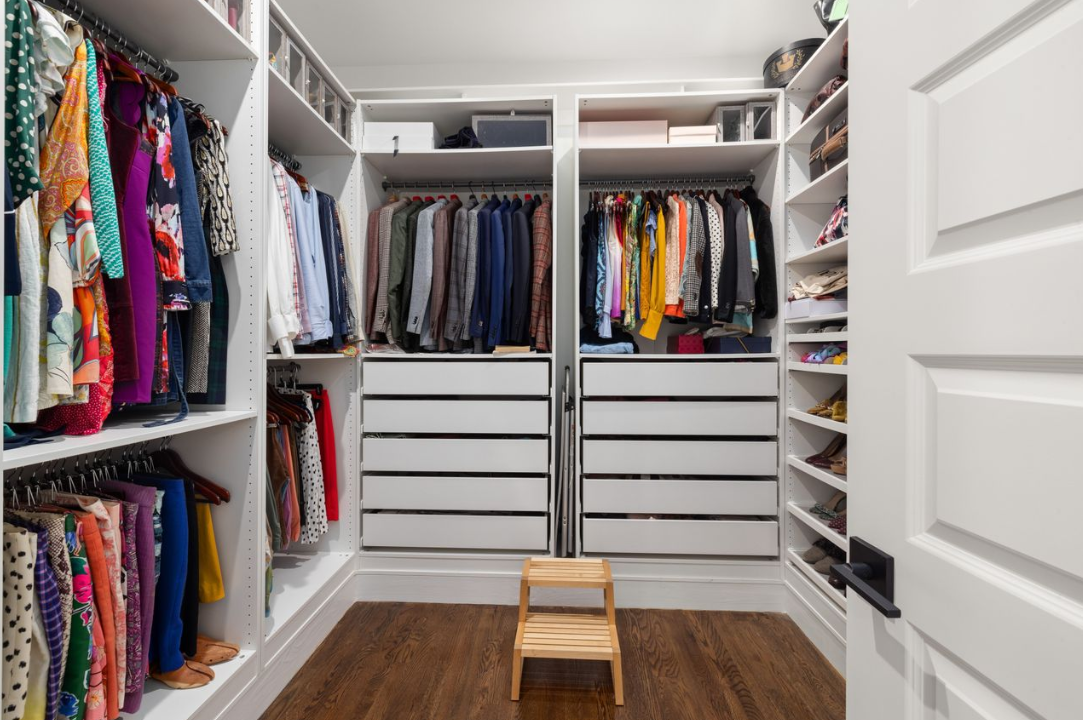
The materials that make up a closet decide how well it holds up over time. Shelves either stay level or they do not. Finishes either wear cleanly or chip. Knowing what a closet is made of matters, especially when you're considering an upgrade. Let’s dive into what custom closets are made of and what you need to know before you buy.
Most closet systems come down to five parts:
Almost all of it starts with an engineered panel (more on this to come) rather than a solid plank. These are the closet materials that determine whether a walk-in system still looks right in ten years, and they get settled long before choosing colors. So it is worth understanding why the industry landed on engineered board in the first place.
Solid wood tends to move. It absorbs moisture during a humid July and gives it back in a dry January, and a wide plank responds by cupping, twisting, or splitting along the grain. In a closet, where panels run wide and shelves span several feet, you see that movement as doors that stop closing cleanly and shelves that no longer sit level.
Engineered board is built to sidestep that problem. Wood is broken down into fibers or particles and pressed back into a flat sheet, leaving no continuous grain for the panel to move along. Medium-density fiberboard, usually called MDF, takes this a step further. Its fibers are broken down finer than particleboard, so the panel is denser and more uniform throughout, which is why MDF machines cleanly enough for shaped door and drawer fronts and holds a long shelf span without a visible dip.
Engineered panels behave the same way across the whole sheet, so a designer can specify shelf spans and support spacing with confidence. Seasonal items put steady weight on the same shelves for years. Solid wood is stronger in some respects, but the seasonal changes make it hard to predict.
This does not make natural wood a poor material. It remains an excellent choice for trim, doors, and drawers. Plenty of closets combine the two, using engineered panel for the structure and solid wood where you see and touch it most.
While panels create structure, the finish absorbs most of the closet’s wear.
A few finishes are used in most custom closet systems. The first is melamine. It bonds a decorative layer directly to the panel and gives a hard surface that wipes clean easily. Another is high-pressure laminate, which is built from multiple layers and cured under heat. This produces a tougher, more scratch-resistant skin for shelves. Next is thermofoil. It wraps a formed surface over shaped fronts, which is how many profiled door and drawer styles get their contours. Last is wood veneer. This works by laying thin layers of real wood over a stable engineered core so you get natural grain on a panel that will not warp.
Edgebanding deserves more attention than it usually gets. An exposed panel edge is where moisture finds its way in and where chipping tends to start, so sealing it properly is what keeps a shelf looking finished after years of hangers sliding past. Thicker banding on the edges you touch most holds up noticeably better.
Finish is also where a closet stops looking like storage and starts belonging to the room. The available colors and textures run from clean whites through woodgrains and darker tones, so you can let the closet recede quietly or make it a feature you actually want to look at.
Choosing hardware for your dream closet matters more than you may realize. This is where quality makes a real difference, especially over time. Here are some you should consider.
This is also how you can personalize your closet. The accessories and design details available to a build cover a wide range, from jewelry trays and drawer dividers to pull-out hampers, valet rods, and lighting. Each of those brings its own mechanism, which means each one is another part that either keeps working smoothly or starts to annoy you.
A well-designed closet accounts for the fact that your needs will change over time. For example, rows of shelf-pin holes drilled into the vertical panels let you move a shelf up or down in a few minutes, with no new parts and no tools. Hanging rods can often be repositioned to convert a long-hang section to double-hang as your wardrobe shifts. You can add additional shelves later into the holes that are already there, so the system flexes without anyone touching its structure.
That flexibility matters most in the spaces that turn over fastest. A kitchen pantry that adapts to a new bulk shopping habit or a countertop appliance you did not own last year stays useful, while one built to a single fixed layout starts working against you the moment your routine changes.
Details make a huge difference when building your custom closet. Bring these five questions to your design appointment to ensure your closet fits your lifestyle.
Knowing what custom closets are made of turns a showroom visit from a guessing game into a real comparison. A stable engineered panel underneath, edges sealed properly, a finish rated for the wear it will actually take, hardware specified for the weight it will actually carry, and components that move when your needs move. Those five things separate a closet still working well in ten years from one that starts showing its age after a season.
If these ideas sparked your imagination, let's make them real. Book your free design consultation with Perfection Custom Closets today and discover how thoughtful design can turn any storage area into a beautifully organized part of your home.


