Locations in Chicago and Minnesota

888-503-6080
.svg)

Choosing a new closet system often comes down to how much customization you actually need. For many homeowners, the choice between semi-custom closets and a fully custom build is the first real decision. Understanding what separates the two makes that choice far easier and helps your budget go further.
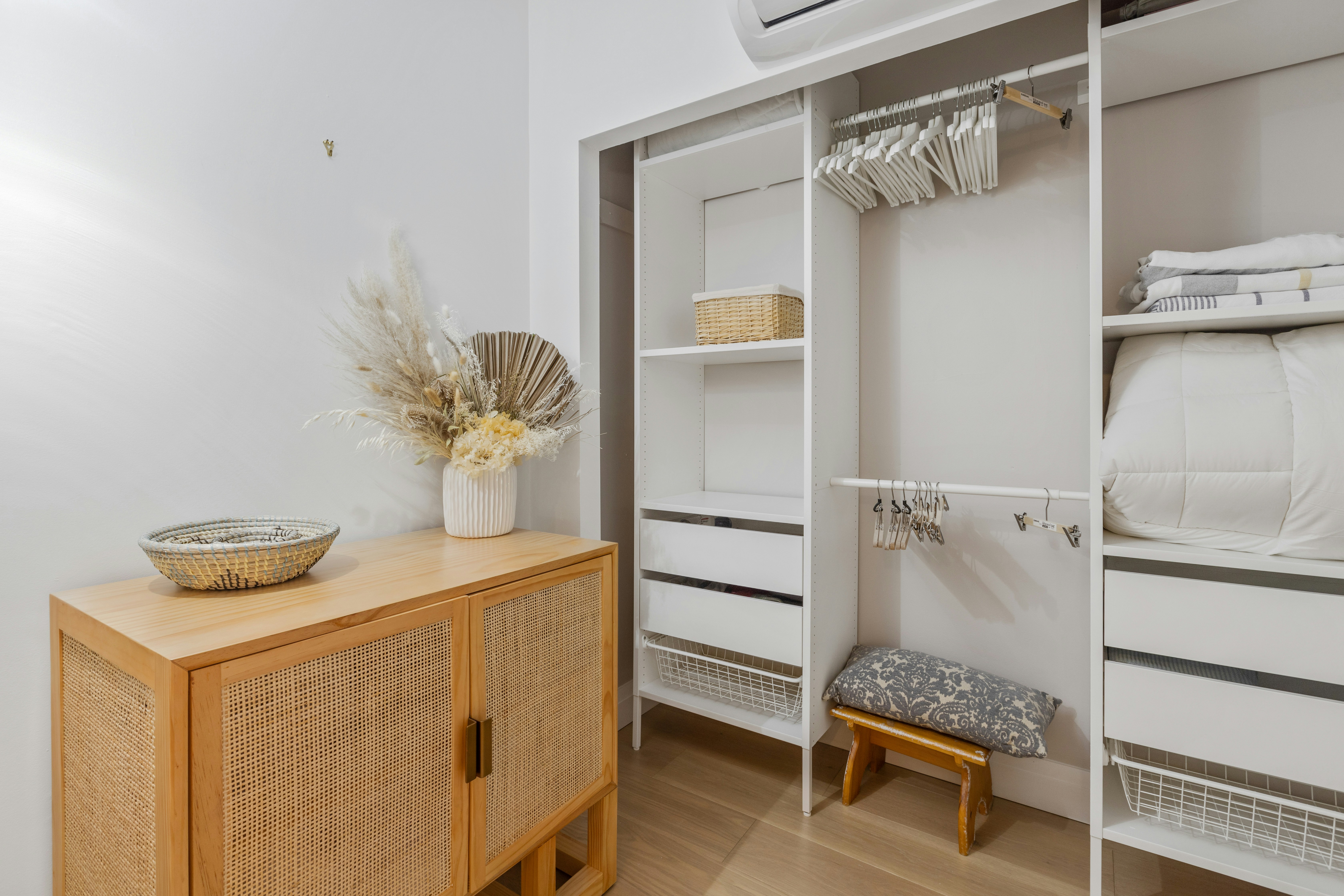
Semi-custom closets are built from ready-made parts offered in a set range of sizes and finishes. Shelves, drawers, hanging sections, and panels come in standard widths and heights, and a designer combines them to fit your space. Many of these systems are modular, though some pieces can be cut or adjusted during installation to improve the fit. You still get real choices in layout, finish, and features, but you are working within a defined set of options.
Fully custom closets are designed around the exact dimensions of your room. Rather than relying mainly on standard-width panels, pieces can be sized and configured to work with your ceiling height, angled walls, and other details. This is the level of detail that goes into a well-designed primary closet, where the goal is to maximize storage rather than round down to the nearest standard size.
When a closet is professionally designed and installed, either approach can deliver durable materials, attractive finishes, and reliable everyday function. The main difference is flexibility. Semi-custom builds a strong result from standard parts, while fully custom shapes itself to the specifics of your room.
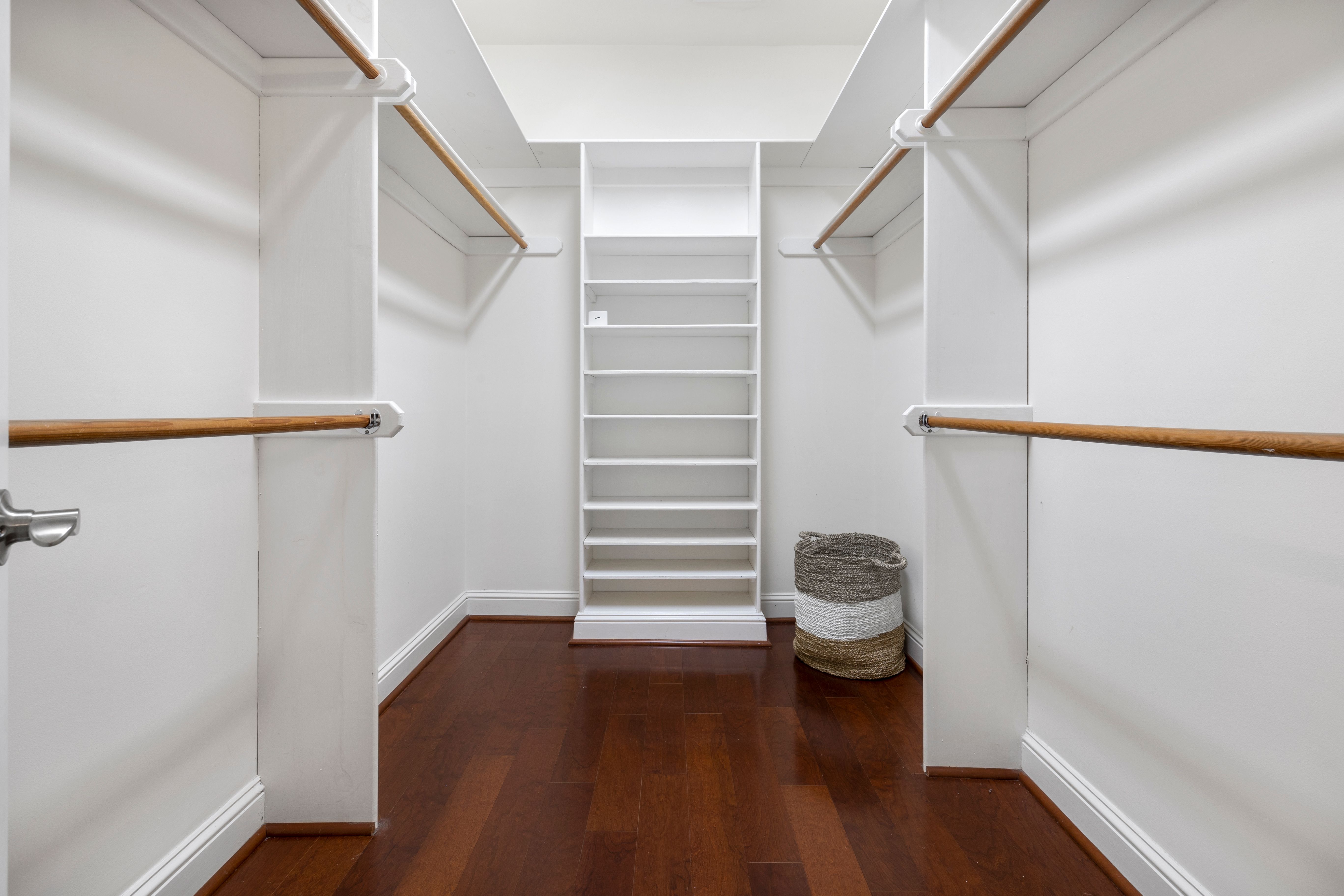
Rooms with straight walls, standard ceiling heights, and reasonable dimensions are often well-served by semi-custom closets, especially when storage needs are straightforward. The standard components line up cleanly, and you get an organized, attractive space without paying for unnecessary adjustments. A fully custom design can still make sense in a standard room when you want specialized storage or a more built-in look.
Odd and angled spaces are a different story. Sloped ceilings under a staircase, narrow reach-ins, bump-outs, and older homes with walls that are not quite square tend to leave gaps when standard modules are forced to fit. A custom kitchen pantry tucked into a tight corner is a good example, since a built-to-measure design can often reduce the gaps a standard module might leave behind.
There is a simple way to think about it. The more unusual your space, the more a fully custom build tends to earn its cost, and the more standard your space, the more semi-custom closets make sense.
A few quick signals can point you toward the right tier:
Homeowners are sometimes surprised by how much they can personalize either option. Semi-custom systems still offer a wide selection of finishes, colors, and hardware, along with practical add-ons like pull-out baskets, valet rods, and drawer dividers. You are choosing from a curated menu rather than starting from a blank page.
Fully custom builds open up the full range of finishes and accessories, including specialty features sized to your belongings. If you want cabinetry fitted around a sloped wall, an island sized to keep a specific walkway clear, or lighting built into a particular spot, fully custom is where those details fit most naturally.
When both levels share the same finish collection, the overall look can be similar. The difference tends to show up in the fit, the detailing, and the range of features available.
The trade-off is fairly straightforward. Semi-custom closets generally cost less up front because they rely on standard parts, while fully custom builds usually cost more and, in return, use your available space more completely.
Neither is automatically the better value. A semi-custom system in a straightforward closet can deliver years of daily use at a friendlier price. A fully custom build in an awkward space can be worth the added cost because it recovers storage you would otherwise lose. Material, finish, hardware, accessories, project size, and installation complexity can affect the final price just as much as the tier itself. The right answer depends on your room, your budget, and how long you plan to stay in your home.
The decision between semi-custom and fully custom closets is less about which is better overall and more about which fits your situation. Standard spaces and tighter budgets often point toward semi-custom, while unusual layouts and specific storage needs point toward fully custom. Many homeowners find that walking through their space with a designer quickly reveals which direction makes sense. Either way, the goal is the same. You want a closet that works quietly and reliably every day.
If these ideas sparked your imagination, let's make them real. Book your free design consultation with Perfection Custom Closets today and discover how thoughtful design can turn any storage area into a beautifully organized part of your home.