Locations in Chicago and Minnesota

888-503-6080
.svg)

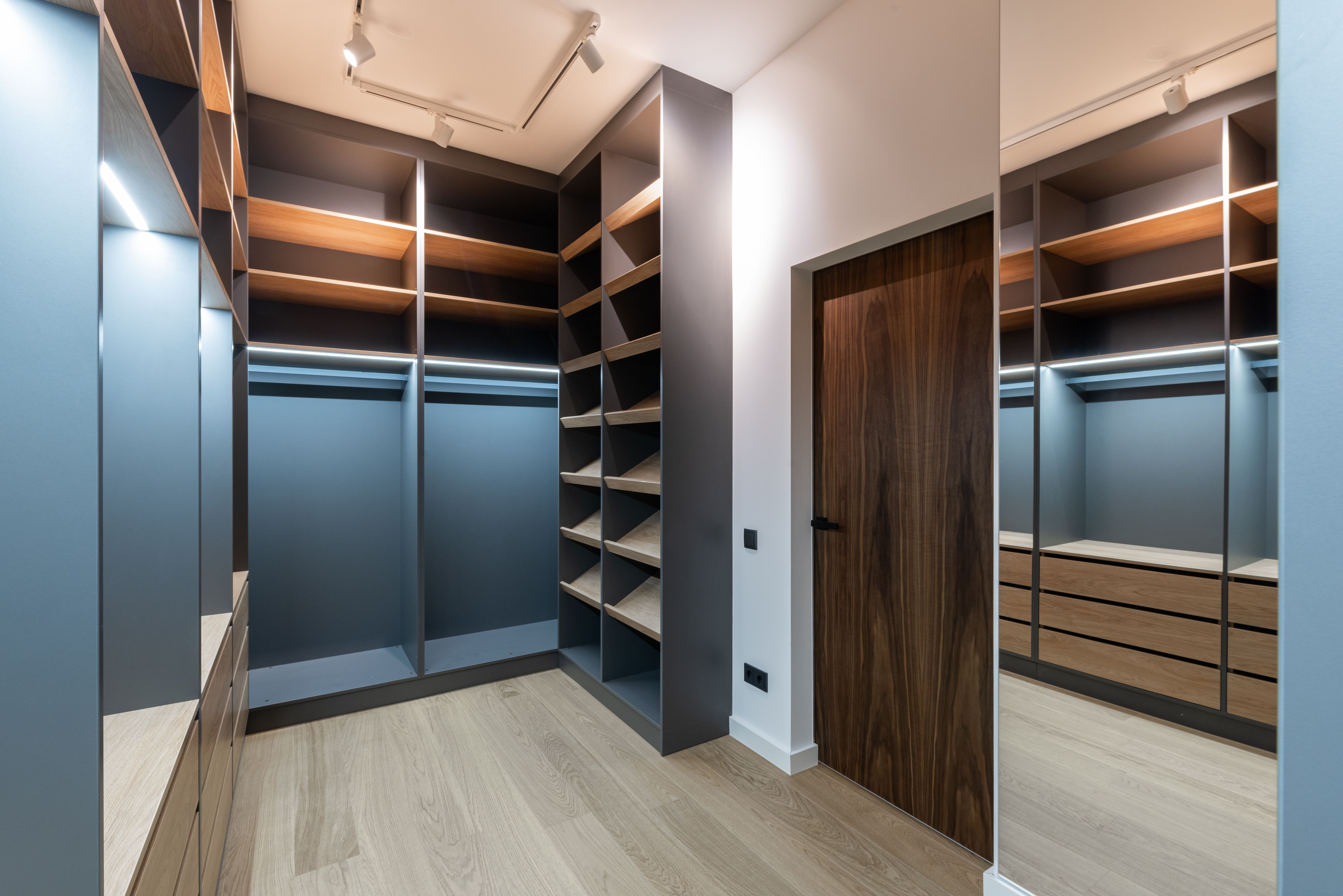
A clean, uncluttered closet only stays that way if phones, tablets, and charging cords have a designated place to go. Smart closet design tucks devices out of sight while they charge and keeps visual clutter to a minimum. Let’s look at how hidden outlets and charging drawers can make a difference in your closet.
It doesn't take much for a primary closet to end up hosting devices it was never designed for, whether that's a charging cord left on a shelf, a phone propped against a jewelry box, or a tablet balanced on a stack of sweaters. Most designed closets were planned around hanging space and storage bins for clothes and shoes, not devices, so tech ends up borrowing space that wasn't built for it.
A docking drawer closet gives your devices a home of their own instead of leaving cords draped across shelves or dresser surfaces. It's a small addition, but it changes how the whole closet feels.
There isn't just one way to bring power into a hidden outlet closet. Depending on the layout and how your household gets ready in the morning, one of these three options usually stands out.
Fitting a drawer with an integrated power or charging outlet creates a docking drawer, so cords and devices stay contained inside and are easier to find when it's time to head out the door. With a properly installed, safety-listed in-drawer outlet, users can plug in compatible devices and keep them powered while they charge. Standard extension cords and power strips should never be improvised for this purpose. The result is a charging drawer that keeps devices easily accessible while staying completely out of sight.
Unlike a docking drawer, a hide-a-dock tucks into the cabinetry itself rather than into a drawer, providing concealed power access and keeping the outlet less visible when it is not in use. It's a good fit for anyone who wants charging access without dedicating a whole drawer to it.
Press down, and a pop-up outlet rises to provide access to power; otherwise, it sits nearly flush with the surface. Anyone building a pop-up outlet closet around a vanity or counter surface will find that this option blends in well, with no permanent visible outlet clashing with the design.
The right placement depends less on the outlet itself and more on how a room gets used every day.
Timing matters when adding built-in power. In a new closet, the outlet can be planned alongside the shelving, drawers, and hanging rods. This usually makes installation easier than adding power after the cabinetry is finished.
Retrofitting an existing closet is still possible, but it comes with a few more variables. A qualified electrician should determine how power will be supplied and whether the installation meets locally adopted electrical codes. The closet designer can then coordinate the required drawer dimensions, hardware clearances, and cabinetry modifications. It's worth having that conversation early, since it's easier to plan for upfront than to retrofit a finished closet a second time.
Any concealed or in-drawer power solution should be listed for its intended use, installed according to the manufacturer's instructions, and connected by a qualified electrician in accordance with locally adopted electrical codes.
Devices change fast, but the need for accessible power in a closet isn't going anywhere. A few small choices can make the closet easier to adapt as technology changes:
None of this requires overbuilding. Good storage solutions treat charging access as part of maximizing space and keeping closet organization adaptable, just as shoe storage or hanging space is planned for from the start.
Cords draped across a shelf and a phone balanced on a dresser aren't signs of a poorly kept closet. They're signs that most closets were not designed with today's devices in mind. Adding a docking drawer, a hide-a-dock, or a pop-up outlet is a small change that clears both counter and floor space, whether that closet is a primary suite retrofit or a brand-new custom build.
If these ideas sparked your imagination, let's make them real. Book your free design consultation with Perfection Custom Closets today and discover how thoughtful design can turn any storage area into a beautifully organized part of your home.