Locations in Chicago and Minnesota

888-503-6080
.svg)


When you have room for a walk-in closet, you might wonder how best to use it. Most people know what they want (more hanging space, better shoe storage, room for two), but translating that into an actual closet configuration requires knowing which layouts exist and which one fits the room you have. Here’s what you need to know about walk-in closet configurations and how to choose which layout fits your space.
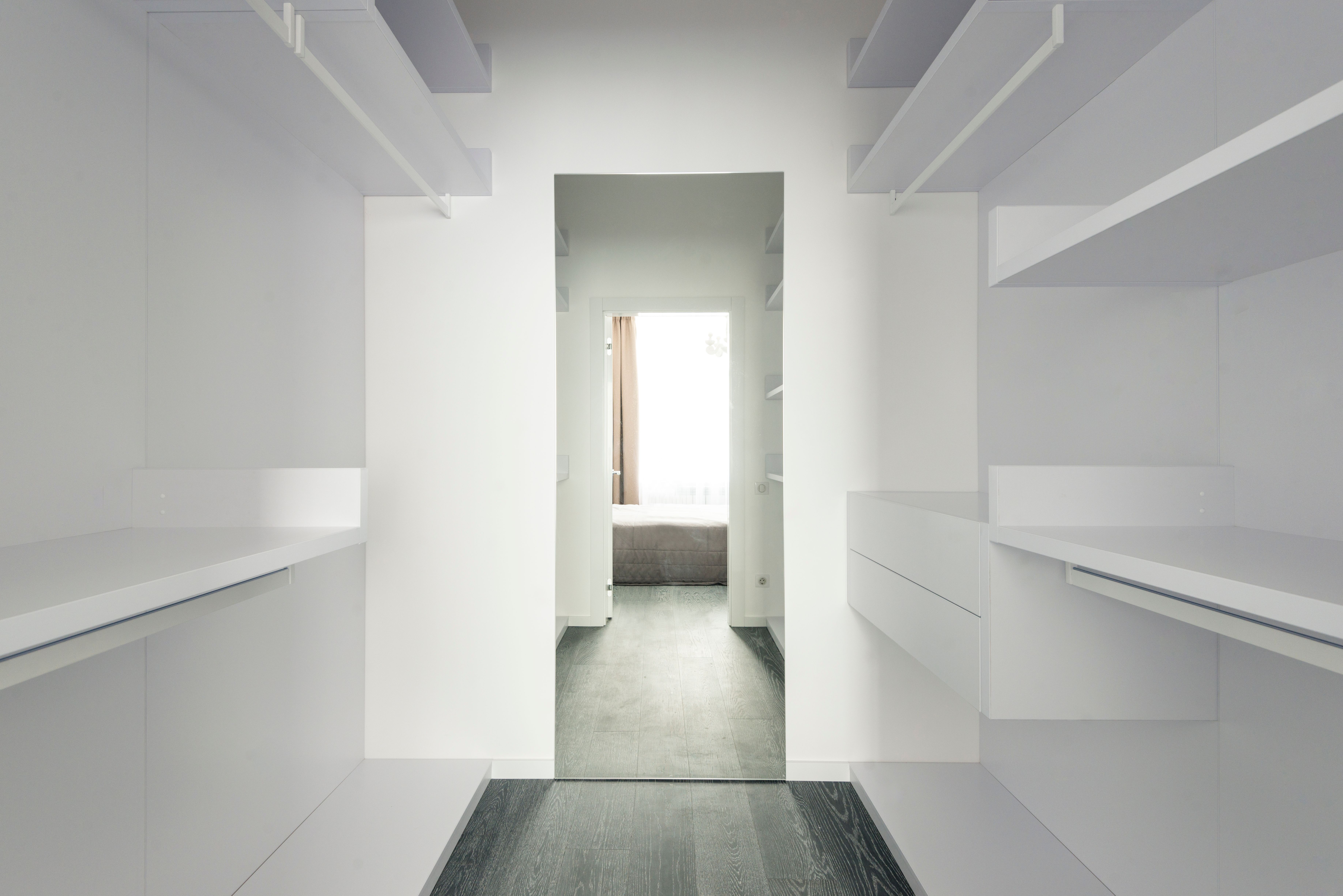
Walk-in closets generally fall into four primary wall configurations:
A center island can be added to any of these configurations when the room supports it. Comfortable movement around an island generally requires 36 to 42 inches of clearance on each side. When that's achievable, an island adds useful drawer space and a surface for packing or laying out outfits. In a tighter room, it tends to take up more than it gives back, and building drawer stacks into the wall units is usually the better call. A well-planned custom walk-in closet can cover most of the same ground without the aisle problem.
Before settling on a closet configuration, it helps to look honestly at what your room is already working with. Where the door swings matters more than most people expect. A door that opens into the room claims closet space and limits what you can put on adjacent walls. Windows are a nice bonus for natural light, but do take up wall space, and HVAC vents or registers need to remain unobstructed regardless of the layout.
Ceiling height determines how much vertical storage you can fit in the space, and ceilings above 8 feet create opportunities for additional shelving and seasonal storage. The wardrobe itself matters too. How much hangs versus folds, how much shoe storage you need, and whether one or two people will be using the closet will shape every decision that follows.
Two people sharing a closet works best when each person has a clearly defined space rather than a dividing line down the middle of a single wall. Assigning full walls or sections to each person means both sides get dedicated hanging and shelving space without overlap.
You can configure each side independently rather than compromising on a layout that works for neither person. The his-and-hers closet design is a great way to balance two wardrobes in one shared space.
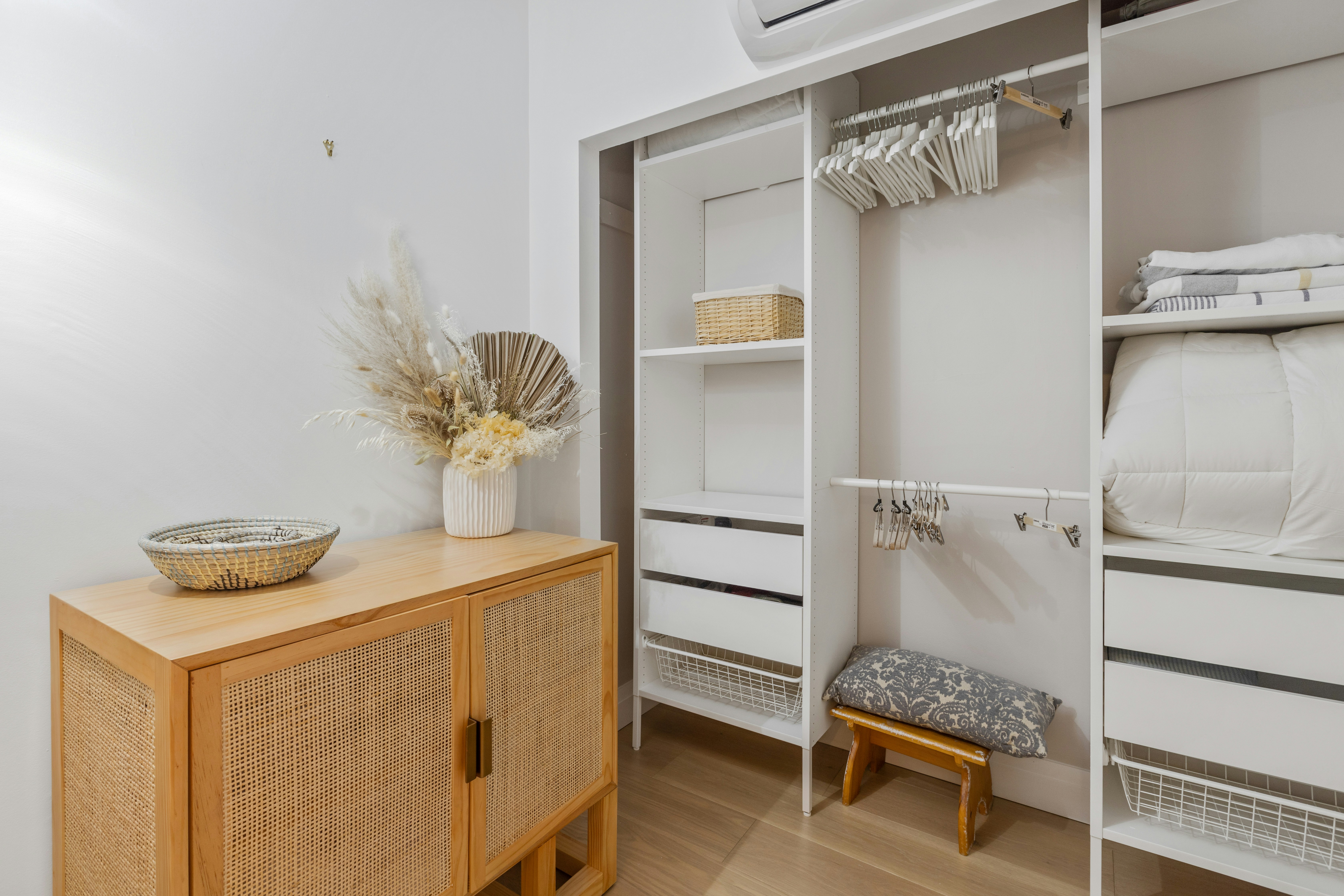
Layout is the foundation, but the components inside are what you interact with every day. A few worth planning for early:
A good closet organizer brings all of these into a shelving system that maximizes space. That's what separates a customized closet from a generic one.
Actual dimensions tell you more than abstract shapes. A 5x8 single-wall closet keeps the floor open while packing one wall with hanging and shelves. A 7x12 room is a natural fit for a two-wall-opposing layout, with systems running down both long walls, across a comfortable aisle. An L-shape handles awkward corners well, turning them into shoe shelves or hamper space. A U-shape in a 7x8 or larger room creates distinct storage zones and can accommodate an island in larger footprints.
Getting a walk-in closet right starts with knowing what you're working with before the design process begins. Real rooms rarely match a textbook template, and a good designer will find a storage solution that fits your actual space. That way, you can have the closet of your dreams and stay organized.
If these ideas sparked your imagination, let's make them real. Book your free design consultation with Perfection Custom Closets today and discover how thoughtful design can turn any storage area into a beautifully organized part of your home.