Locations in Chicago and Minnesota

888-503-6080
.svg)

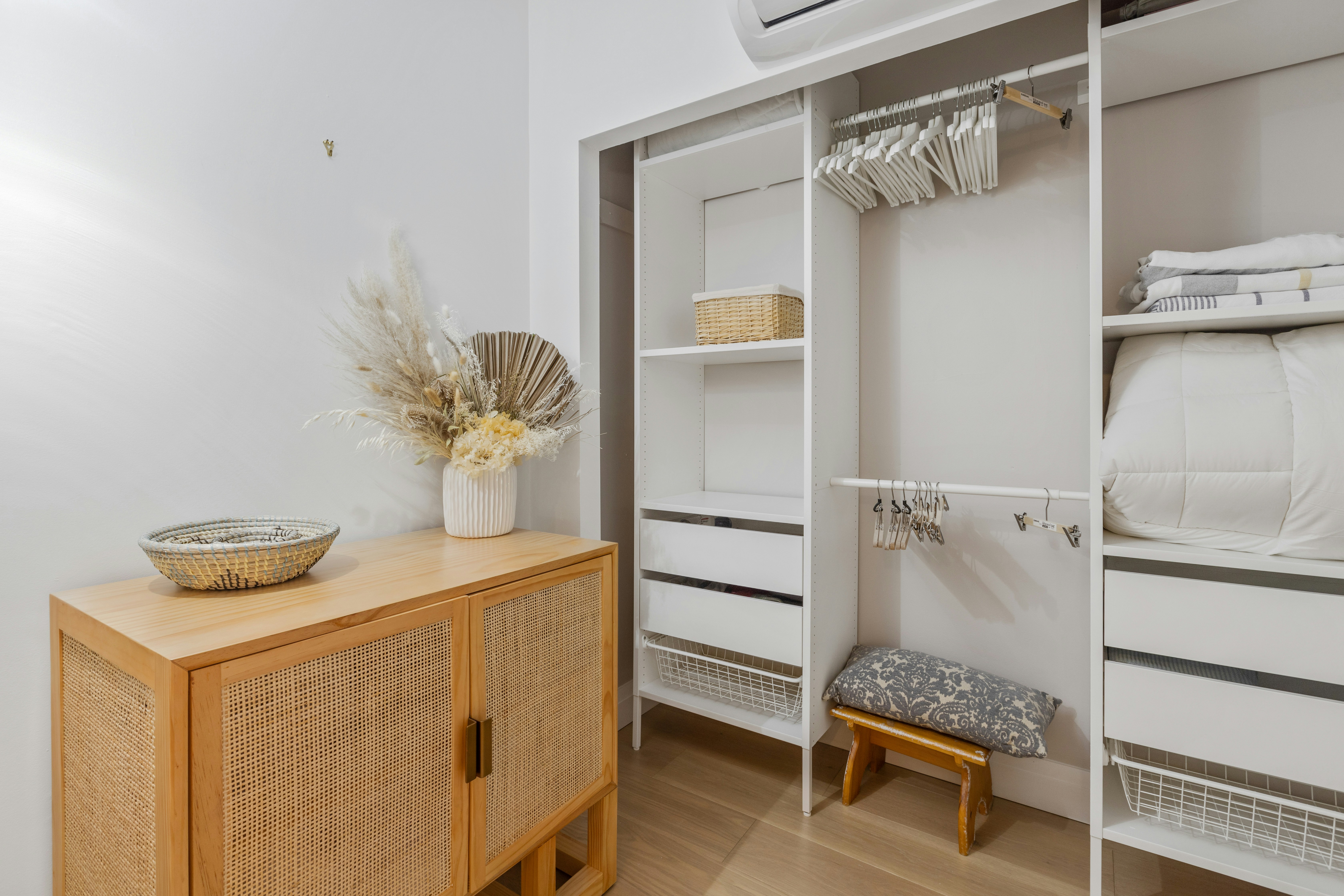
Reach-in closets have a reputation for being limited, but in most cases, the problem is with the layout, not the size. A well-planned reach-in closet design with drawers and racks can provide the same functionality as a walk-in closet. It just takes some upfront thought about configuration. Here’s what you need to know to get the most out of your reach-in closet.
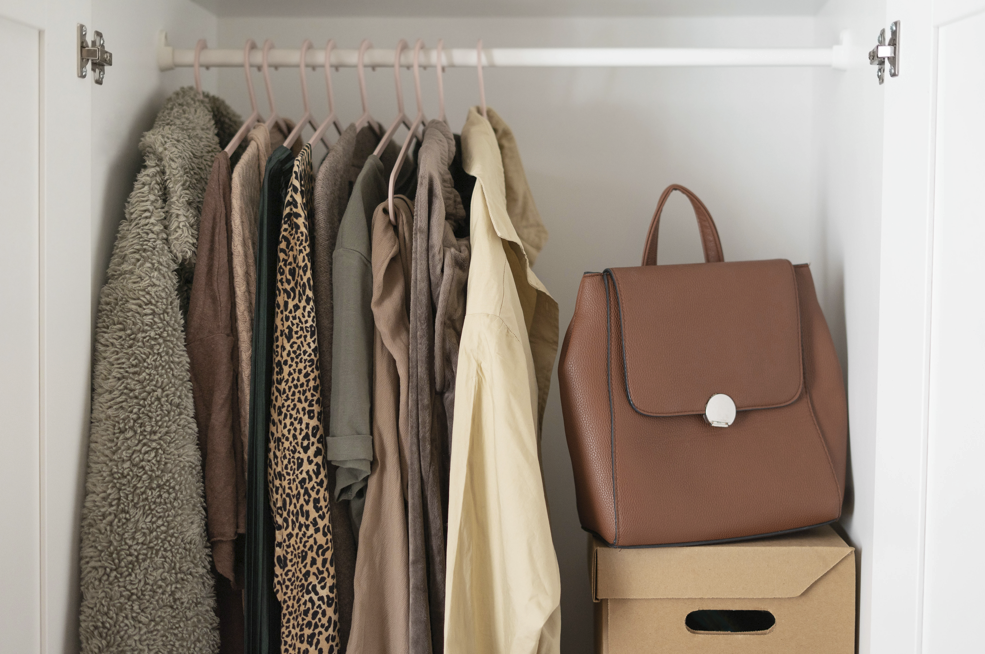
Most reach-ins look about the same: a single rod running wall to wall, one shelf overhead, and the floor as a catch-all. For a while, it works. Then the rod fills up, the shelf disappears under clutter, and the floor becomes a pile of shoes and bags nobody wants to deal with.
The rod itself is not the problem. The real issue is that a single hanging section treats the entire closet as one category. Most wardrobes are more complex than that. They include long hanging items like dresses and coats, shorter pieces such as shirts and jackets, folded clothing that belongs on shelves, smaller items that are best stored in drawers, and shoes that need a dedicated space near the floor. A reach-in closet can accommodate all of these categories. It just needs a design that accounts for each one.
Double hang is often one of the most effective upgrades available. A double-hanging configuration replaces one long rod with two stacked rods, which can nearly double the hanging capacity for shorter garments like shirts, jackets, and folded pants without increasing the closet footprint.
Drawers are often skipped in reach-ins because people assume there isn't room. A three or four-drawer bank takes up roughly the same floor space as a shelving tower, though, and for certain items it does a noticeably better job.
Socks, undergarments, folded tees, and accessories usually do better in a drawer than in open shelving. A shelf requires some discipline to maintain. A drawer just closes. For bedrooms without a separate dresser, a custom reach-in closet with a built-in drawer bank can absorb that function entirely, which is a real gain in a smaller room.
Shelving still earns its place for bulkier items like sweaters and jeans that are easier to stack and access on open shelves. Adjustable shelves are worth the investment because they can shift as the wardrobe does. Most well-designed reach-ins use both, with drawers handling smaller folded items and shelving handling the rest.
A single adult, a couple sharing a closet, and a kid's room all call for different setups, and it's worth sorting that out before committing to a layout.
For one person, a reliable starting point is a long-hang section on one side, a double-hang section on the other, a drawer bank between them, and a shoe area along the floor. The proportions shift based on the wardrobe: someone with a lot of dresses needs more long hang, while a mostly casual wardrobe calls for more double hang. The basic structure holds either way.
A shared closet works best with a clear center division. Each person gets their own hanging zone, and shared accessories like a hamper or a pull-out chrome basket sit in the middle. Without that kind of structure, it can become difficult to maintain an equitable division of space over time.
In a kid's room, accessibility matters most. A single hang rod at a height children can actually reach, low drawers, and cubbies for shoes at floor level all help. Adjustable shelving is especially worth planning for here because kids' storage needs shift quickly, and movable components mean the closet can adapt without a full redesign every few years.
In a walk-in, there's usually enough room to hang things on hooks and leave items out on a center island. However, with a reach-in, every accessory has to earn its spot. The ones that tend to work best are pull-out options that add function without adding bulk.
These four are worth knowing about:
These design options make a reach-in closer much more doable.
The reach-ins that hold up well over time tend to share a few characteristics: adjustable components that shift as the wardrobe changes, a dedicated home for each category of items, and a floor treated as usable storage rather than overflow space. A smaller closet that's been carefully configured is often more functional day-to-day than a larger one that hasn't.
If these ideas sparked your imagination, let's make them real. Book your free design consultation with Perfection Custom Closets today and discover how thoughtful design can turn any storage area into a beautifully organized part of your home.