Locations in Chicago and Minnesota

888-503-6080
.svg)

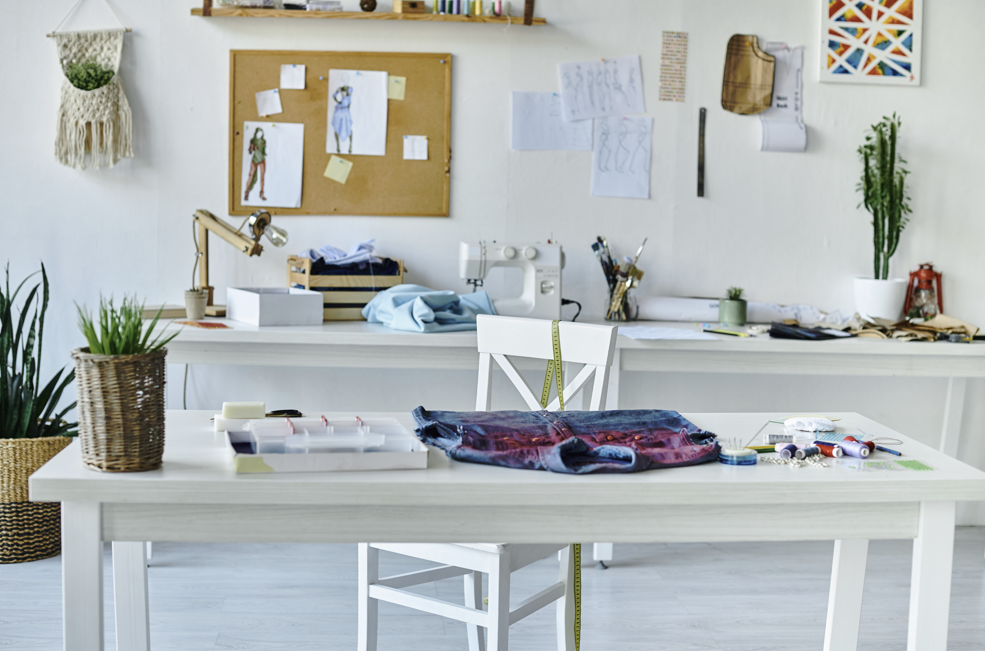
Converting a spare room into a dedicated hobby space sounds straightforward. The tricky part is designing storage that actually fits how you work. This is where custom hobby room storage comes into play. A dedicated space for all of your hobby storage needs makes your craft more accessible and enjoyable.
The typical hobby room tries to do two things at once: keep supplies organized and serve as a workspace. The problem is that most people never think through which supplies need to be immediately accessible and which can be tucked away. Everything ends up on the same shelf, and the room starts to feel chaotic within a few weeks of use.
Good craft room organization starts with an honest look at how you actually work. Do you leave projects mid-progress for days at a time? Do you need to spread out materials across a large surface? Are there tools that have to stay out because putting them away means recalibrating them every session? The answers should drive every storage decision in the room.
The most useful framework for any dedicated hobby room is separating active supplies from archived ones. Active supplies are the items you reach for in nearly every session. Archived supplies are the items you use occasionally or are saving for a future project.
Active supplies deserve prime real estate: open shelving, pegboards, shallow drawers, or countertop bins that keep everything visible and within arm's reach. Archived supplies can go in closed cabinets, labeled boxes on higher shelves, or a nearby closet. The goal is to stop treating every item as equally important, because it isn't.
Work-in-progress storage deserves its own category entirely. A half-finished quilt, a model mid-paint, or a scrapbook layout mid-assembly all need a place to live between sessions without getting disturbed. A few options that work well:
Different hobbies have genuinely different needs, and the storage that works well for one can be completely wrong for another.
Sewing and quilting generate a lot of small components: spools, bobbins, zippers, patterns, and fabric cuts that have to stay organized, or the whole system breaks down. Sewing room storage often works well with a combination of deep drawers for fabric, shallow divided trays for notions, and vertical hanging space for patterns and tools. A dedicated ironing surface that folds away is also worth building in from the start.
Scrapbooking and paper crafts require flat, protected storage for paper and photos, as well as easy access to cutting tools, adhesives, and embellishments. Horizontal paper trays, divided cubbies, and clear-fronted bins all help. The key is to keep cutting surfaces clear and to have a reliable home for everything that tends to migrate.
Model building and collecting come with their own set of challenges. Model railroad storage, for example, has to accommodate layouts that can't be disassembled between sessions, plus a large inventory of small parts, paints, and tools. Collectors need display storage that protects pieces while keeping them visible. Built-in shelving with adjustable heights keeps collections organized and on show, while integrated lighting can further enhance visibility.
Whatever the hobby, the creative solutions that work best are the ones designed around what the hobby actually demands, not a generic version of what a "craft room" is supposed to look like.
Lighting and electrical access are easy to overlook during planning and immediately obvious once the room is in use. Task lighting over the primary work surface is essential for any work that requires attention to detail. Natural light is great, but it's rarely sufficient on its own.
Outlets matter more than most people expect. If you sew, you need outlets near the machine and the iron. If you paint models or do detailed craft work, you may need a light with a built-in magnifier plugged in close by. Planning outlet placement during a build or renovation is generally simpler and less expensive than adding new electrical access after the room is finished.
Storage for reference materials is another thing that often gets overlooked. A few dedicated shelves or a small built-in bookcase can keep manuals, pattern books, and notebooks off the work surface and within reach when you need them. The design options for a custom build make it easy to work that in from the start.
For most homeowners, the hobby room is often a converted bedroom or a finished basement corner. That's completely workable. The existing dimensions and layout will shape what's possible, but a good design process starts with the hobby's needs and works backward to the room, not the other way around.
Starting from scratch is obviously more flexible. Many of the best hobby room setups are retrofits: rooms reimagined with purpose-built storage around what was already there.
The most important factor isn't your room's size or shape. It's whether the storage was designed with a specific hobby in mind. In many cases, a room designed around how you actually work can be more functional than a larger space with a generic layout.
Every hobby is different, and the storage that works for one person's sewing room may be completely wrong for someone else's model workshop. The common thread is intentionality. Knowing what you need before you build, rather than working around whatever ends up in the room, is what separates a hobby room that actually gets used from one that slowly becomes a catch-all.
If these ideas sparked your imagination, let's make them real. Book your free design consultation with Perfection Custom Closets today and discover how thoughtful design can turn any storage area into a beautifully organized part of your home.