Locations in Chicago and Minnesota

888-503-6080
.svg)

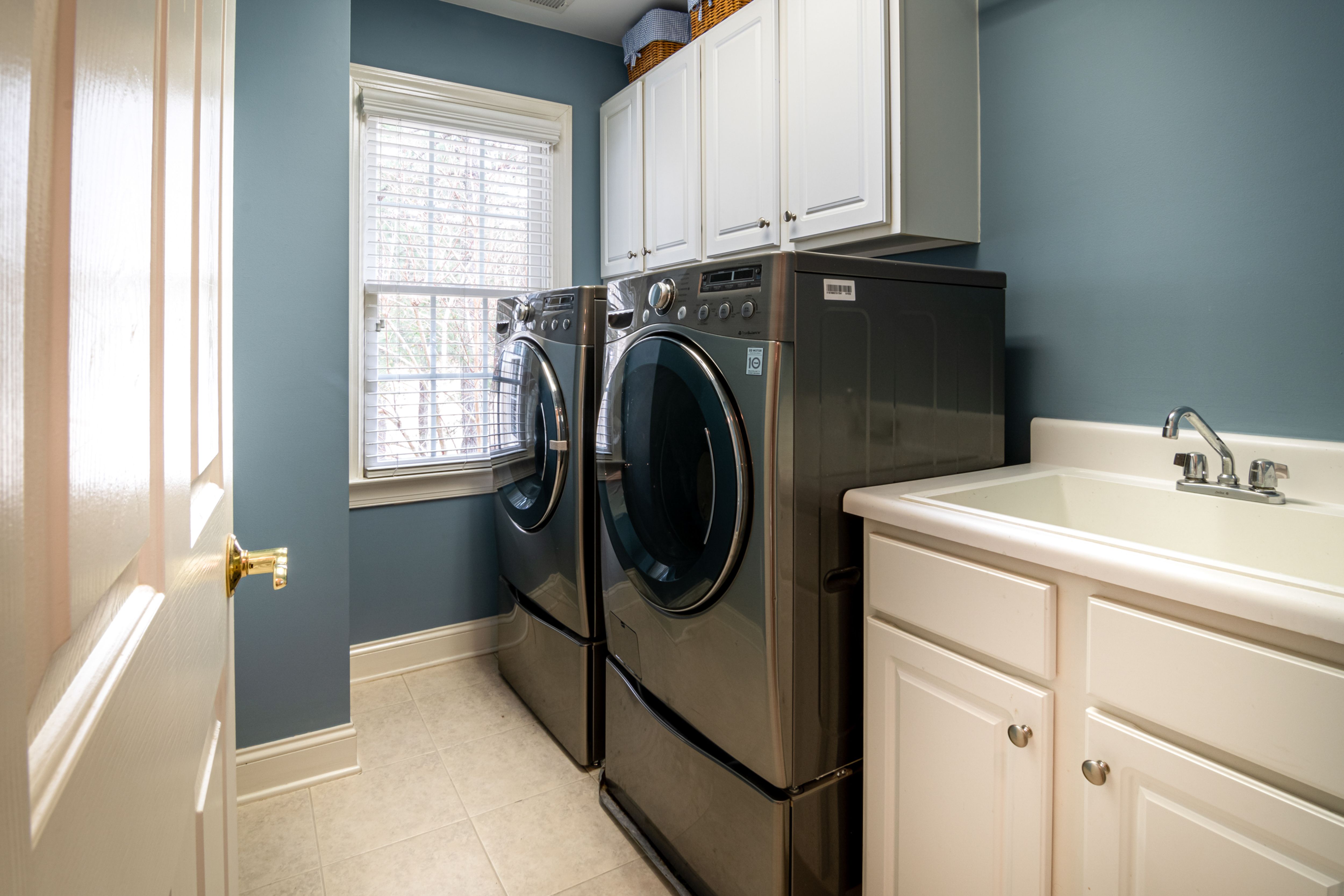
The laundry room is one of the most-used spaces in the house and, somehow, one of the last to get any real design attention. Most homeowners end up with whatever the builder dropped in: a couple of wire shelves, a bare bulb, and not nearly enough room to do the job well. A custom laundry room design is worth thinking through carefully before construction starts. The decisions you make early determine whether the finished room actually works.
Think about the friction points in your current setup. Where does the clean laundry sit when you don't have time to fold it? Where do the hampers go? Is there any counter space, or are you folding on top of the dryer? These are clues about what your laundry room is missing.
A well-designed laundry room handles the full sequence: sorting, washing, drying, folding, hanging, and putting away. Many laundry rooms are designed primarily around washing and drying, leaving homeowners to improvise spaces for everything else, which is why clean laundry so often ends up on the couch.
Custom laundry room cabinets let you design around your actual routine.
Getting the layout right starts with thinking through how laundry actually moves through your home. Here are the questions worth considering:
There are no wrong answers, but thinking through these questions can help you avoid design decisions you'll regret once the room is in use.
This is where custom laundry room design starts to get interesting. The right cabinetry turns a purely functional room into one that's genuinely pleasant to use.
Pull-out chrome baskets work especially well for sorting. You can separate lights, darks, and colors without needing laundry baskets or freestanding hampers taking up floor space. A wall-mounted or built-in ironing board holder keeps the board accessible without leaning it against the wall behind the door. Drying rods built into an upper cabinet give you a dedicated spot for hang-dry items instead of draping them over the washer and dryer. Valet pins are a small addition that makes a real difference for anything that needs to be pulled fresh from the dryer and hung immediately.
Upper cabinets with doors keep the space looking tidy. Lower cabinets or drawers handle laundry supplies, cleaning products, and anything else that tends to drift in. The goal is a room where everything has a home, so nothing ends up piled on the machines.
Folding counter height matters more than people expect. Standard counter height is typically 36 inches, but taller homeowners may prefer a slightly higher folding surface for improved comfort. If you have young kids who help fold, something lower might make more sense. A custom build lets you set that height intentionally.
A utility sink can be especially useful if you hand-wash garments, regularly pre-treat stains, or bathe pets. If you're honest with yourself and the answer is "maybe occasionally," the sink can take up valuable counter space that would be better used as a folding surface. Think about your real habits, not your aspirational ones.
One thing that almost always needs a plan: the inevitable pile. That means clean laundry waiting to be folded, items headed back to other rooms, and things that came out of pockets. A dedicated landing zone, even just a small shelf or a drawer, prevents that pile from taking over the machines.
Combining a laundry room and mudroom can be a practical solution when the floor plan and available square footage support both functions. In many households, dirty clothes, sports gear, and muddy shoes come in through the same entry points, so putting the machines nearby just makes sense.
A combined space works best when there's a clear visual separation between the two functions, with mudroom benches and coat storage on one side and laundry equipment and cabinetry on the other. It doesn't work as well in very tight spaces where the two uses compete for square footage. It's also a harder case to make when the main entry is far from the utility room, and running a drain line would be a significant construction project.
If the combination makes sense for your floor plan, it's worth designing the two zones together from the start rather than treating them as separate afterthoughts.
A few choices tend to make a noticeable difference in how useful the finished room feels:
None of these are complicated decisions, but they're much easier to make before construction than after.
If you're working on a laundry room renovation or building a new one and want to get it right the first time, Perfection Custom Closets has been designing functional, well-built storage spaces in the Chicago area and Twin Cities for 30 years. The laundry room design process starts with a free consultation, and the team will help you work through layout, cabinetry, and the details that are easiest to get right before a single cabinet goes in.
If these ideas sparked your imagination, let's make them real. Book your free design consultation with Perfection Custom Closets today and discover how thoughtful design can turn any storage area into a beautifully organized part of your home.