Locations in Chicago and Minnesota

888-503-6080
.svg)

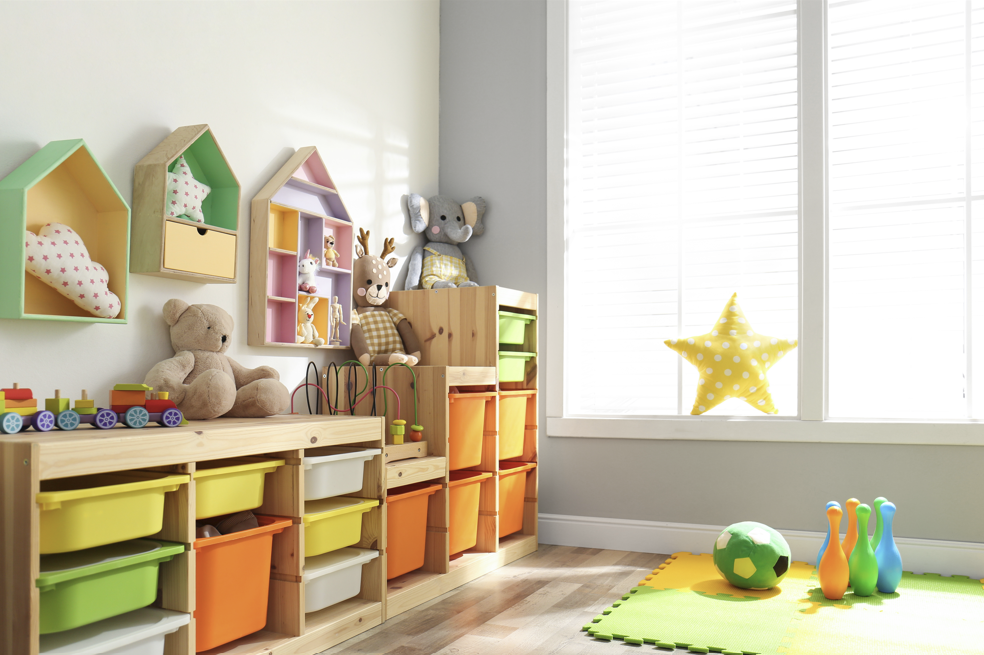
Many playroom storage solutions work well for a specific stage of childhood, but become less effective as your children's needs evolve. Parents pick up a set of colorful bins or a toy chest. For a while, it works. Then the kids get older, the toys get bigger, and the whole system starts to feel like it's working against them. Here’s how to incorporate built-in playroom storage that will grow with your kids.
The core problem with many off-the-shelf playroom storage solutions is that they're optimized for one phase. A low cube shelf that works well for toy storage may no longer be the most efficient use of space once kids are storing books, school supplies, or larger items. Toy bins get repurposed as laundry baskets. Some lightweight freestanding furniture can show wear or become less stable over time.
In many cases, the challenge isn't the organization itself but keeping storage aligned with changing needs. Kids change fast. Their stuff changes with them.
Well-designed, built-in playroom storage can offer greater flexibility because it's tailored to the room and can incorporate adjustable components. When the configuration can be updated, with shelves repositioned, cubbies converted, and surfaces repurposed, the room can grow alongside the kids using it.
The most useful way to think about playroom built-ins isn't what your kids need today. It's what they'll need in three years.
For toddlers and preschoolers, low open cubbies are everything. Easy access, quick cleanup, toys in sight. But by the time those same kids are in middle school, they need a place to spread out homework, charge devices, and store gear that isn't Duplo blocks.
Perfection Custom Closets' playroom built-ins are built with this transition in mind. Instead of locking in one configuration, a well-planned system uses adjustable shelving, convertible cubbies, and modular components that can be reconfigured as needs shift. The bones stay put. The interior adapts.
A common progression might look like:
Not every element of a playroom built-in ages equally well. These five features are often useful across multiple stages of childhood.
Parents often invest in themed finishes early and find themselves regretting it a few years later. A playroom painted with cartoon murals and built-ins in primary colors is charming at age four. By age nine, it may feel dated or out of step with what older kids want.
Timeless design options for playroom built-ins tend to be neutral in base color, white, soft gray, or natural wood tones, with room for pops of color through accessories, bins, and art. This approach lets the room's personality shift over time without requiring a full renovation.
The same logic applies to hardware. Simple hardware often has a broader long-term appeal than highly themed designs. Soft-close hinges and drawer slides are worth the upgrade in a room that sees heavy daily use.
One approach is working with a designer who builds in flexibility from the start rather than designing around today's snapshot.
That means thinking through traffic flow, accounting for the room's architecture, and planning a system that doesn't require a full teardown to reconfigure. Bonus rooms and basements often have odd angles and low soffits that a custom approach can work around. Creative storage solutions can make even the most awkward spaces work in your favor.
Many homeowners choose to invest in built-in playroom storage during a renovation or shortly after moving in, because the room is easier to modify before it's fully furnished. But a good designer can work with an existing space just as well, and well-planned, built-in playroom storage can be added at any stage.
The goal isn't a perfect playroom for right now. It's one that keeps working as your kids grow into it.
If these ideas sparked your imagination, let's make them real. Book your free design consultation with Perfection Custom Closets today and discover how thoughtful design can turn any storage area into a beautifully organized part of your home.